Chevannes in the USA !
Contributions by Marsha Mills – Foundation Archivist – Hagley Museum and Library
A house born of a separation
In 1910, Alfred I. du Pont had Swamp Hall, his childhood home near the family powder mills, torn down. His former wife, Bessie Gardner du Pont, had lived there throughout their nineteen years of marriage. Divorced since 1906, she had to leave with her four children and moved into modest lodgings in downtown Wilmington.
Pierre S. du Pont’s gift
In 1926, Pierre S. du Pont, Alfred’s cousin and long-time business rival, offered to build Bessie a house. It was his way of thanking her for the eleven-volume life of Éleuthère Irénée du Pont she had just completed at his suggestion. He bought her a lot of about 7.6 acres.
Bois-des-Fossés brought to Delaware
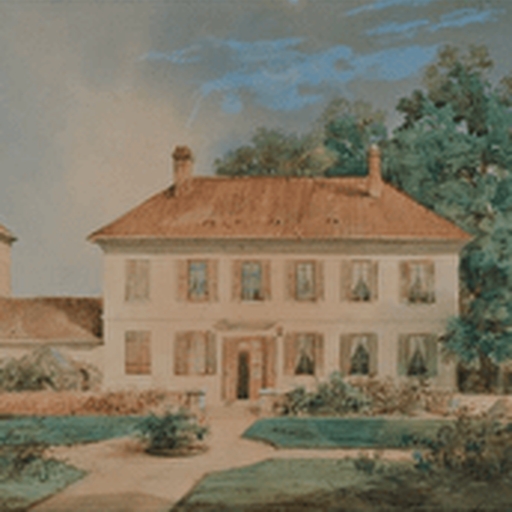
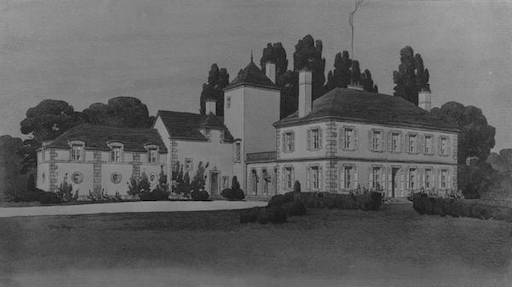
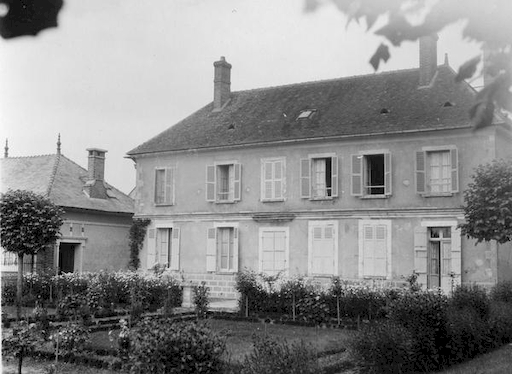
Bessie took Bois-des-Fossés, the du Pont family estate in France, as her model and named her home after the neighbouring village: Chevannes. The commission went to architect Albert Ely Ives, under the supervision of H. Rodney Sharp, Pierre’s close associate. Ives worked from Stanley Arthurs’ painting of Bois-des-Fossés, made for the first volume of Bessie’s work. Completed in the spring of 1928, the house echoes the original’s silhouette (stucco walls, red tile roof, dark shutters), but has an L-shaped plan opening onto the garden and is adapted to Delaware’s humid summers.
A living link with Chevannes
While the house was being built, Bessie travelled to France. She bought hardware, light fixtures, parquet floors and mantelpieces, and went to Bois-des-Fossés, where she gathered chestnuts that she later planted around her new home. Stanley Arthurs’ painting would hang above the library mantel.
Today
After Bessie’s death in 1950, the property was sold to Frederick G. I. Singer, grandson of the founder of the Singer Sewing Machine Company. It still bears the name Chevannes.
Source: Maggie Lidz, The du Ponts: Houses and Gardens in the Brandywine, 1900-1951, New York, Acanthus Press, 2009. Images: Hagley Museum and Library.